
How to Make a Long Distance Relationship Work
A long-distance relationship requires an extraordinary amount of commitment, time, and energy. It won't look like the version described in romantic movies, but here's how to actually make it work.
February 14, 2026 - 10 min read

A long-distance relationship requires an extraordinary amount of commitment, time, and energy. It will not be like how it's described in romantic books and movies.
It can be brutal, much harder than expected, and genuinely difficult at times. Long-distance relationships will always test you, but if you make it through that test, the bond you come out with tends to be unlike anything else. Why? Because even though you’re not physically together, you end up growing stronger mentally, emotionally, and as a couple in ways that being in the same city rarely forces you to. Your appreciation for each other deepens, and you find yourself missing them more genuinely, every single time.
There’s a saying that if you can survive a long-distance relationship, you can survive almost anything together. The bond formed between two people who make it work is genuinely exceptional, and there tends to be a lot more gratitude involved — less is taken for granted, because none of it was ever guaranteed to begin with.
That said, long-distance relationships do come with real arguments, doubts, and sometimes anxiety or even depression. That doesn’t mean they never work out, though. A long-distance relationship is fundamentally a two-way effort. It will never work if it’s one-sided. Both people have to consistently put in time and energy to stay connected. Yes, that’s true of any relationship, but for long-distance ones specifically, it tends to take noticeably more of all three: effort, time, and energy.
So here are the tips and habits worth knowing if you want to keep things going.
Don’t put your life on hold
There’s no getting around it — long-distance relationships require some sacrifice. That said, it’s important to stay mindful about not giving up more of your own life than is genuinely necessary, since doing that tends to breed quiet resentment over time.
This is especially risky when a long-distance stretch was supposed to be short but ends up dragging on longer than planned, whether because of a job relocation, financial setbacks, or anything else outside your control. In situations like that, one partner might delay or completely avoid building friendships, hobbies, or interests in their own city, telling themselves it isn’t worth the effort — and then a few years later, they’re left wishing they’d actually lived their own life more fully in the meantime.
It’s one thing to look forward to eventually being in the same place as your partner. It’s a very different thing to put your entire life on pause until that happens. Make sure you’re genuinely making the most of the life you have where you currently are, in the present moment, rather than treating it as a waiting room.
Don’t isolate yourself, bury yourself entirely in work, or talk yourself out of seeking connection and community just because your partner isn’t there to share it with. Live each day fully, whether your partner happens to be around or not. As a bonus, staying engaged with your own life also tends to make the time apart pass noticeably faster.
Stay genuinely honest with each other
Talk about your fears, your insecurities, your jealousy, and moments of feeling disconnected — all of it. If you try to hide something from your partner, that secret tends to eat away at you from the inside eventually, one way or another. Don’t try to handle everything entirely on your own. Be transparent with each other, and let your partner actually support you the way they’re meant to. It’s always easier to address a problem while it’s still small than to have it come out later, once it’s already grown into something bigger. It helps to remember: it isn’t you versus your partner over the problem, it’s the two of you versus the problem, together.
Whatever it is that’s sitting in the back of your mind, don’t let it just build up quietly. Keep the communication flowing instead. Things tend to get a lot simpler that way. Even if talking about it means you argue for an hour, or don’t speak for a day or two afterward while you both process it, it’s still worth doing. Working through it usually confirms just how much you actually need each other, and you tend to come back from it stronger than before.
Don’t over-communicate out of anxiety
Sometimes, because you’re apart so much of the time, it’s easy to start feeling like you should be in constant contact with each other at all hours, just to prove the relationship is still solid.
That’s not really how it works, though — think about it: if you were living together, you wouldn’t actually be in constant contact either. You’d be at work all day, or out with friends, completely out of touch for stretches at a time, and that would be perfectly normal. The same logic applies here.
Try not to become overly anxious about needing to call or message constantly. Communicate as often as feels natural for the two of you, and don’t stress about the inevitable quiet gaps — every relationship has them, distance or not. Give each other room to breathe and grow individually. You can’t keep watering a plant nonstop and expect it to thrive; it needs air and sunlight too, not just constant attention.
Keep things as normal as possible
Even though you’re not together physically all the time, your day-to-day connection can still feel as ordinary and grounded as possible.
Talk to your partner about the small, easily overlooked details of your day — the things that might seem too mundane to mention. That kind of everyday conversation is exactly what makes a relationship feel healthy and close. Doing this regularly makes you feel nearer to your partner, and it helps the relationship feel more like a normal, lived-in one rather than something existing only in big, occasional check-ins.
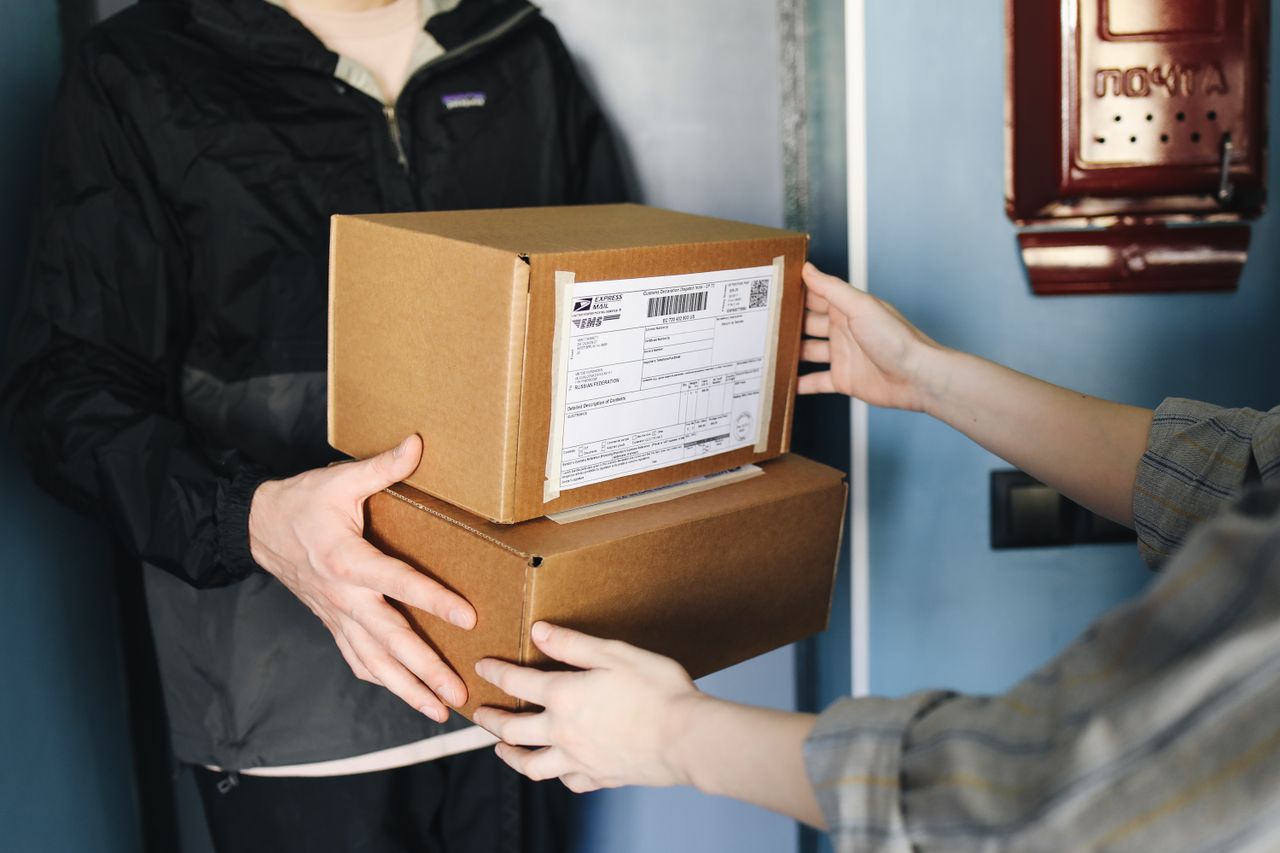
Give each other something physical to hold onto
There’s real power in a keepsake — whether it’s a small pendant, a ring, a keychain, a playlist of songs that mean something, or even just a bottle of their perfume or cologne. We tend to attach meaning to small, ordinary objects from our daily lives, whether we mean to or not. That’s part of why something so small can mean so much to the person holding onto it, even when it might look like nothing special to anyone else.
Don’t underestimate the power of having something physical that reminds you of your partner. Keeping a piece of clothing that still smells like them, holding onto a token that represents your commitment to each other, or displaying a gift from them somewhere visible in your room can all serve as small, tangible reminders of their presence. And don’t underestimate the joy of receiving something physical from them either — a handwritten card, a surprise gift, or a care package of your favorite treats can go a long way.
Keep the spark alive

A huge part of any relationship is physical and romantic chemistry, and keeping that spark alive takes more intentional effort in a long-distance relationship than it does when you see each other every day.
Flirt with each other over text or on calls — playful teasing, inside jokes with a bit of an edge, or simply reminding each other how attracted you both still are is often enough to keep that fire from going out. For more on keeping that momentum going, see our guide on taking your relationship to the next level. Wanting each other, in every sense, acts like glue that helps hold the relationship together across the distance.
Get creative with how you communicate
While you shouldn’t smother your partner with constant messages, you do want to be consistent enough that they know you genuinely care.
A daily “good morning” and “goodnight” text is a nice baseline, but on its own, it’s usually not quite enough to sustain real closeness over the long run. Send the occasional voice note or short video of your day. Talk about the silly, random things that happened to you. Share your rambling thoughts and your small frustrations, the same way you would if you were sitting next to each other.
Make your partner feel like part of your everyday life, even if they’re thousands of miles away. That sense of inclusion matters more than any single grand gesture.
Be confident in the relationship
Insecurity tends to lead to excessive calling, excessive messaging, and unnecessary pressure on both sides. Left unchecked, it slowly drains the fun and connection out of your communication, and things start to spiral from there.
In a long-distance relationship, you need genuine confidence that the relationship will hold. At the core of that confidence is trust — trust in yourself, and trust in your partner. Our guide on building trust in a relationship covers this in more depth. Without it, distance becomes a lot harder to manage than it needs to be.
Plan for the reunion, not just the distance
It helps enormously to have something concrete to look forward to, rather than treating the distance as an open-ended stretch with no clear end in sight. Even a loosely planned visit, a shared goal for when you’ll next be in the same place, or a rough timeline for when the distance will end gives both of you something tangible to work toward together. Uncertainty is often harder on a relationship than distance itself, so reducing that uncertainty wherever you realistically can makes a real difference.
Build small rituals together
Even across distance, small recurring rituals can do a lot to make the relationship feel grounded and ongoing rather than like a series of disconnected calls. A shared show you watch “together” over video call once a week, a good morning text that’s always the first thing you send, a Sunday call that’s never skipped no matter what — these small, repeated habits give the relationship a rhythm of its own, one that doesn’t depend on either of you remembering to make an effort every single day.
Manage jealousy honestly
Distance has a way of amplifying insecurity, especially when you can’t see what your partner’s actually doing day to day. If jealousy comes up, the healthiest response is naming it directly rather than letting it quietly fester into resentment or passive-aggressive comments. Something like, “I know this is probably nothing, but I felt a little insecure when you mentioned that coworker — can we talk about it?” gives your partner the chance to reassure you, rather than leaving you to spiral on your own with half the information.
Conclusion
In the end, it’s completely okay to fight, to argue, and to feel sad sometimes in a long-distance relationship. Just remember that the distance itself is temporary. If you get through that temporary stretch while holding onto the belief that you’ll eventually reach the permanent part — the two of you actually being together — the relationship tends to feel far more valued once you get there. You’ll appreciate each other more than you might have otherwise.
Enjoy the time you have now rather than overthinking every possible outcome. Cherish the small moments, celebrate the small wins, and don’t be afraid to celebrate birthdays and milestones over a video call if that’s what you’ve got. Send each other gifts, eat breakfast or dinner together on a call, fall asleep on the phone together sometimes. And best of all, when you can manage it, surprise them with an unplanned visit. Distance is hard, but it isn’t forever, and it’s rarely as permanent as it feels in the moment.